Pipa’s March Update
How Conservation Keeps Her Safe in a Changing Forest
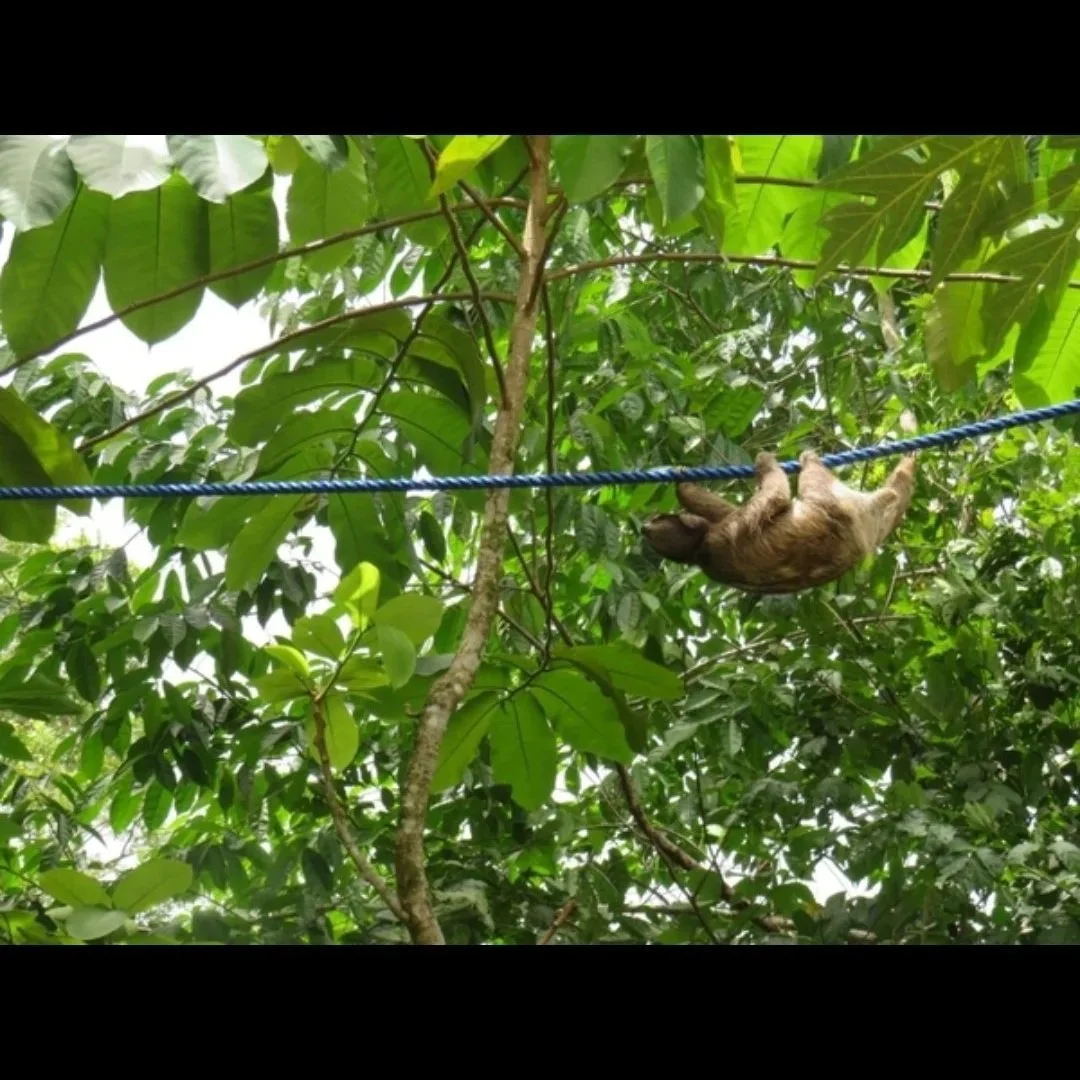
Sloth Fact of the Month:
Sloths rely so heavily on continuous canopy cover that even a small break in the treetops can isolate them. Rope bridges allow them to travel safely between forest patches without ever descending to the ground.
FAHLO Wildlife Tracking Program x The Sloth Conservation Foundation
Photo credits: FAHLO App & The Sloth Conservation Foundation
Pipa’s March Movements: Slow Steps With Big Meaning
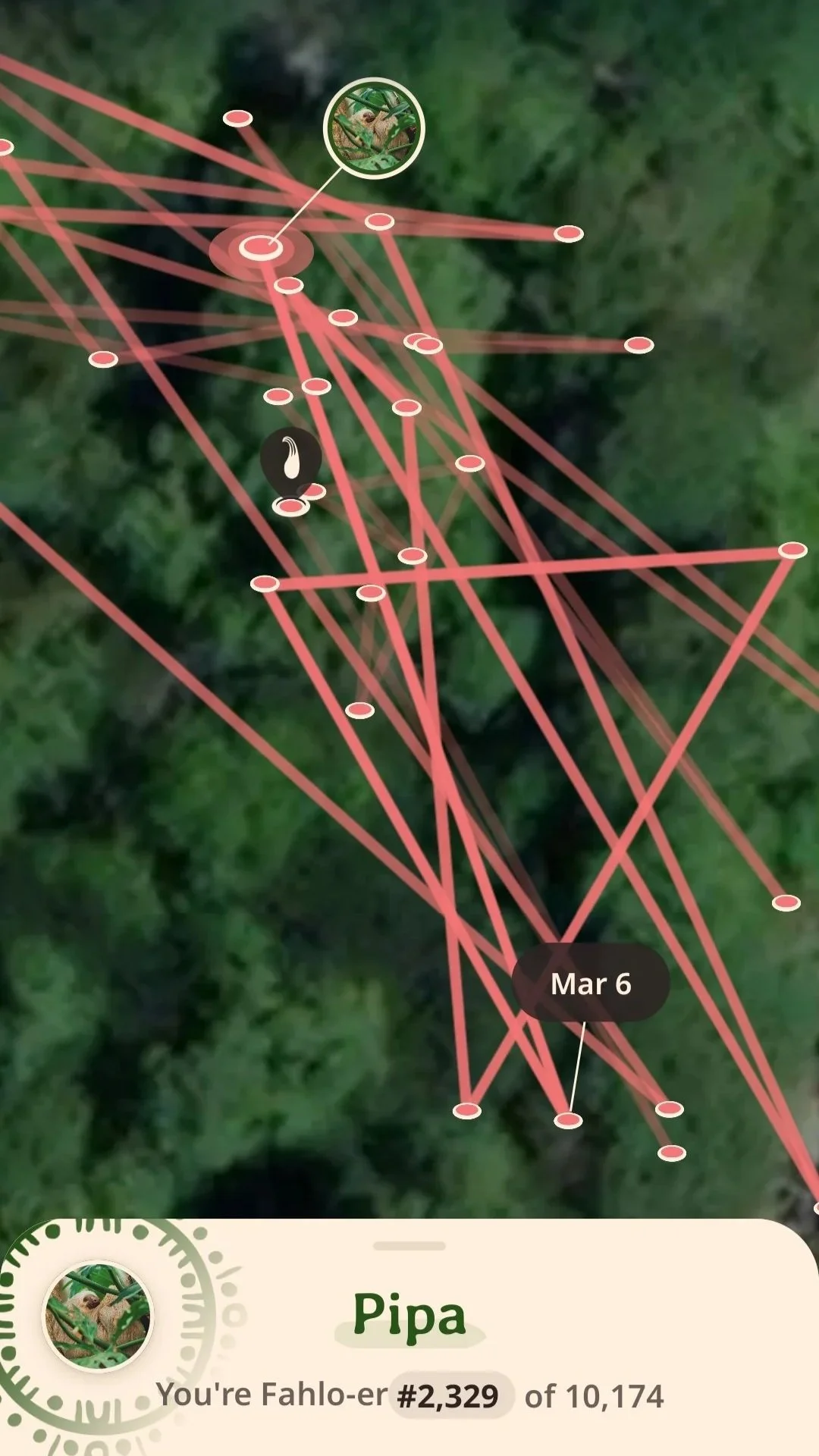
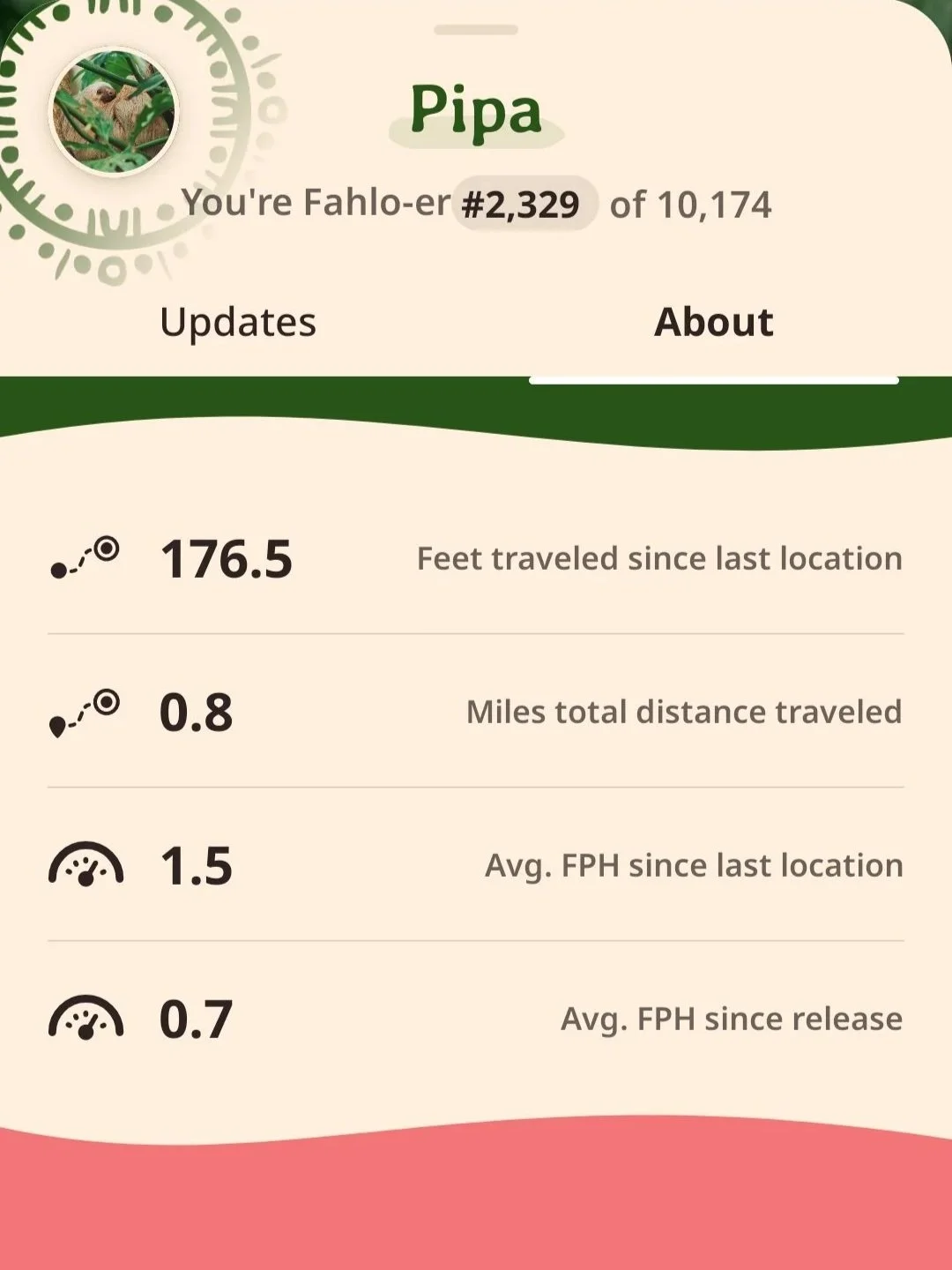
Pipa has been on the move again this month, exploring new stretches of her rainforest home with her signature gentle pace. Her latest tracking data shows she’s traveled 176.5 feet since her last recorded location, bringing her total distance to 0.8 miles since release. Her average movement rate remains steady at 1.5 feet per hour, a healthy rhythm for a wild sloth navigating the canopy.
Each red line on her map represents a moment of exploration — a new branch, a fresh cluster of leaves, or a safe resting spot chosen with instinctive care. Even small movements tell a big story about how she’s using her habitat and how conservation efforts are helping her thrive.
Pipa’s March Movements: Slow Steps With Big Meaning
Pipa has been on the move again this month, exploring new stretches of her rainforest home with her signature gentle pace. Her latest tracking data shows she’s traveled 176.5 feet since her last recorded location, bringing her total distance to 0.8 miles since release. Her average movement rate remains steady at 1.5 feet per hour, a healthy rhythm for a wild sloth navigating the canopy.
Each red line on her map represents a moment of exploration — a new branch, a fresh cluster of leaves, or a safe resting spot chosen with instinctive care. Even small movements tell a big story about how she’s using her habitat and how conservation efforts are helping her thrive.
How Rope Crossings Help Sloths Like Pipa Stay Safe
One of the most important conservation tools supporting sloths today is the installation of rope crossings, also known as canopy bridges. These simple but powerful structures connect fragmented sections of forest, allowing sloths to move safely above the ground.
For sloths, staying in the canopy isn’t just a preference — it’s survival. Roads, cleared land, and gaps in the treetops can trap them on one side of their habitat, forcing them to descend to the ground where they’re vulnerable to cars, dogs, and other dangers. Rope crossings give them a safe, elevated path to continue their natural movement patterns.
Pipa’s tracking map shows her navigating areas where these conservation innovations make a real difference. Every safe crossing point helps her access food, shelter, and new territory without ever touching the forest floor.
Why This Work Matters
Tracking Pipa’s movements helps conservationists understand:
How sloths use connected canopy pathways
Where additional rope crossings are needed
How habitat fragmentation affects wildlife
Which areas of the forest are thriving — and which need protection
Her slow, steady journey is a reminder that conservation isn’t always dramatic. Sometimes it’s a single rope stretched between two trees that changes everything.
All sloth facts, movement data, and conservation information in this post are sourced from the FAHLO Wildlife Tracking Program in partnership with The Sloth Conservation Foundation. Images are screenshots from the FAHLO app and used with appreciation.
