Pipa’s First Movements — Slow Steps Through the Canopy
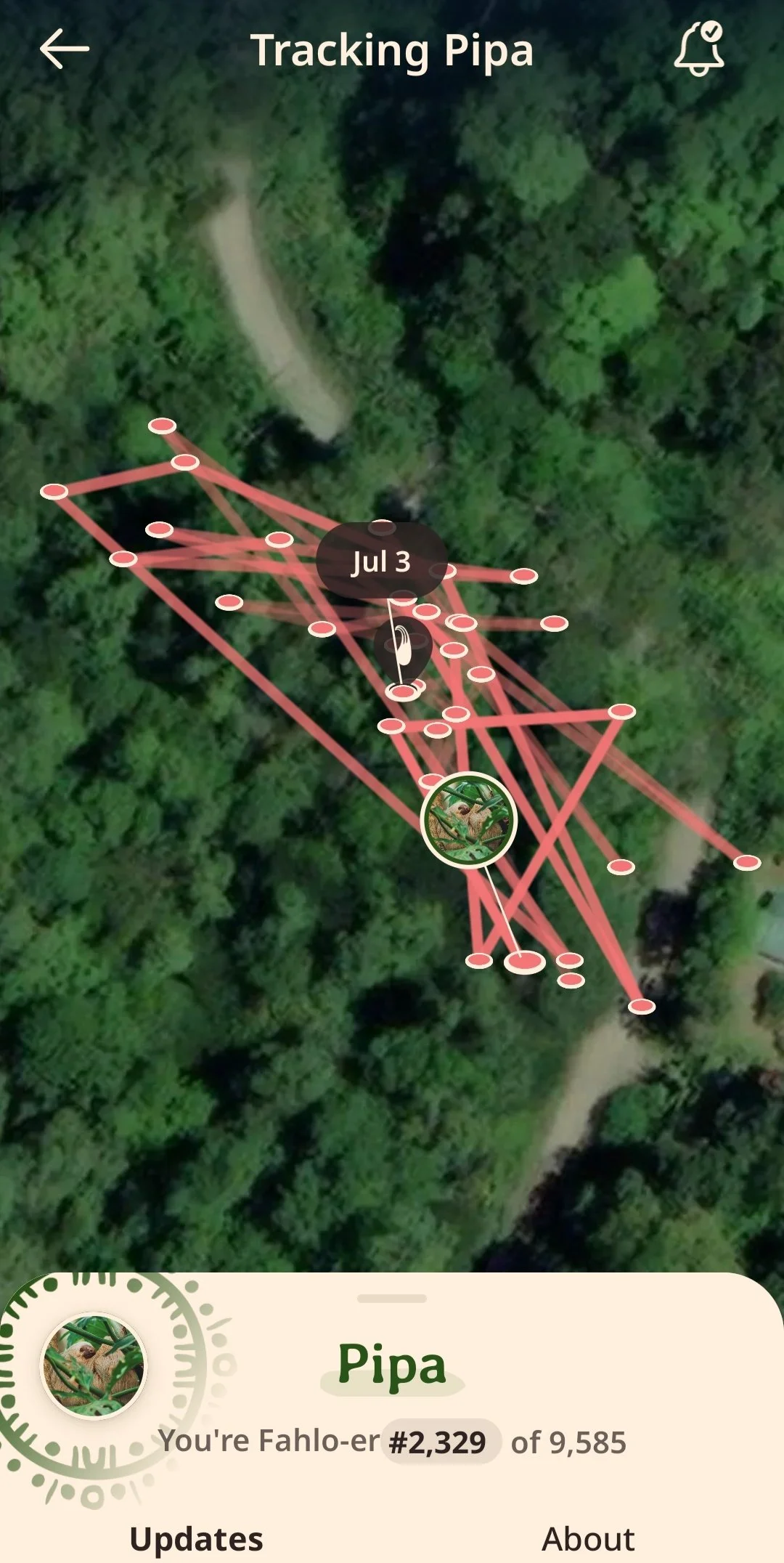
Pipa has officially begun her slow, steady journey through the South Caribbean rainforest, and her tracker is giving us our first real look at how she moves through her world. Since her last recorded location, she’s traveled 125.4 feet, bringing her total tracked distance to 0.7 miles. For a two‑fingered sloth, that’s a whole adventure.
Sloths move with intention, not urgency. Her average speed — 1.0 feet per hour since her last location — is exactly what researchers expect from a healthy sloth living in primary forest. Every small shift tells a story: a new branch, a fresh patch of leaves, a safer resting spot.
These early pings help researchers understand how sloths use their habitat, how far they travel between feeding sites, and how stable their home ranges are. For us, it’s a gentle reminder that progress doesn’t have to be fast to be meaningful.
What We Know So Far
Total distance traveled: 0.7 miles
Latest movement: 125.4 feet
Average speed: 1.0 feet per hour
Habitat: Primary forest canopy
Threat level: Habitat loss remains her biggest risk
Pipa is settling into her routine, and we’ll keep following her slow, stubborn steps as her story unfolds.
Image and educational content courtesy of the FAHLO Wildlife Tracking Program and The Sloth Conservation Foundation.
Sloth Superpowers in Action
Pipa isn’t just adorable — she’s a tiny ecosystem all on her own. One of the most fascinating things about sloths is that their fur hosts an entire world of life. Researchers call it a “mobile ecosystem,” and Pipa carries it everywhere she goes.
Sloths grow a layer of green algae and fungi on their fur, which helps them blend into the canopy. This natural camouflage protects them from predators and keeps them safe while they nap, forage, and move through the trees.
But the real magic? A single sloth can host up to 950 moths and beetles in its fur. These insects rely on the sloth for shelter, and in return, they help fertilize the algae that gives sloths their green tint. It’s a tiny, perfect cycle — and Pipa is part of it.
Built‑in camouflage from algae and fungi
A living ecosystem supporting hundreds of insects
Slow metabolism that conserves energy
Upside‑down digestion thanks to a looped esophagus
Incredible resilience — sloths can fall from over 100 feet without injury
Every update from Pipa’s tracker teaches us something new about how sloths survive, adapt, and thrive in the rainforest.
All sloth facts, movement data, and conservation information in this post are sourced from the FAHLO Wildlife Tracking Program in partnership with The Sloth Conservation Foundation. Images are screenshots from the FAHLO app and used with appreciation.
